
The Fabric
The Architecture of Governance

Architectural Foundation
The foundational infrastructure for governed enterprise operations
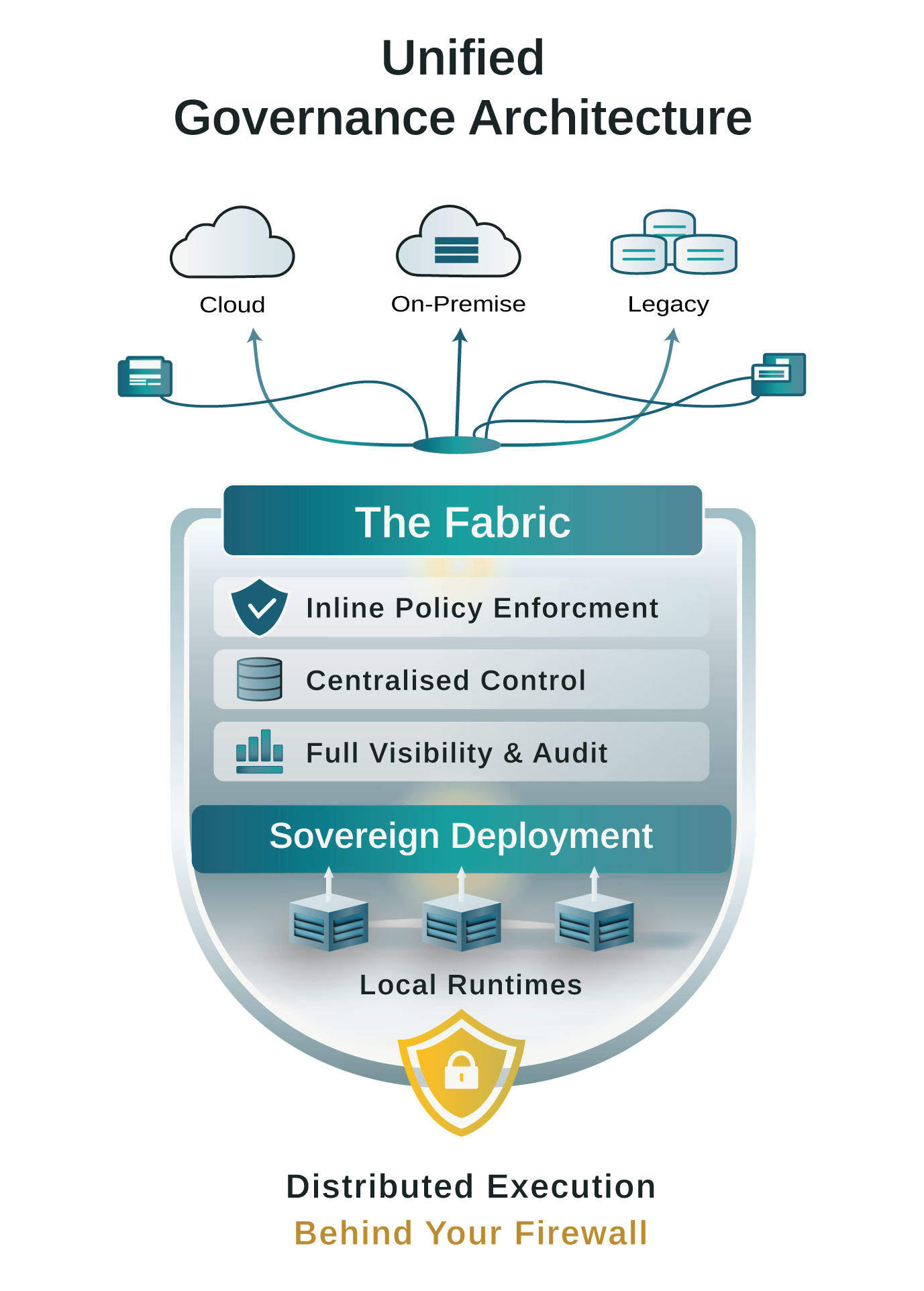
The Fabric is a unified architectural layer that consolidates systems, data, and intelligence onto a single governed infrastructure. It provides the grounding for Maicell’s iPaaS and automation, ensuring that execution remains secure, compliant, and under institutional authority.
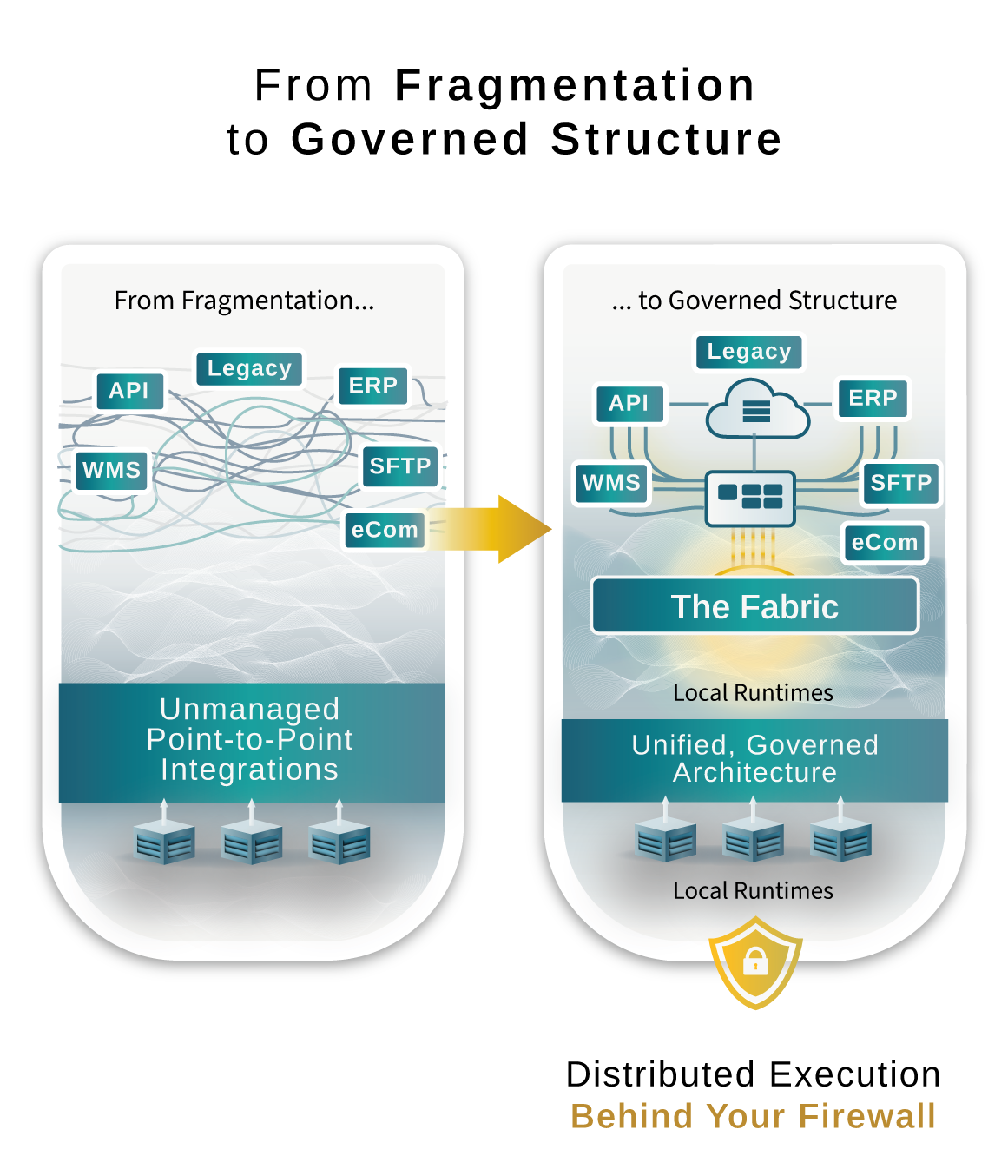
As enterprise environments scale, integration landscapes fragment into unmanaged point-to-point connections where governance is a reactive afterthought. The Fabric resolves this by embedding policy directly into the execution layer—preventing architectural drift while enabling operational velocity.
Structural Requirement
The Necessity of an Architectural Fabric
High-speed automation and fragmented systems create a visibility gap. Without a consistent foundation, ownership becomes unclear, and governance becomes impossible to enforce at scale.
The Fabric establishes a consistent layer where integration, automation, and intelligence are governed by design.
The Fabric allowed us to transition from fragmented point-to-point connections to a unified, governed environment without disrupting core operations.
Embedded Governance
Governance by Design
In The Fabric, governance is intrinsic to the execution layer. Policy enforcement is a structural requirement, not an external audit process.
This unified model applies consistently across internal integrations, API management, B2B/EDI exchanges, and governed AI interactions.
Consistent Enforcement
Uniform policy application across all execution points.
Centralised Control
Data access and flow remain under institutional authority.
Total Observability
Managed Evolution
System changes are introduced through governed mechanisms.
Enterprise scale
Built for Distributed Complexity
The Fabric is engineered for the requirements of the distributed enterprise. The architecture utilises distributed execution with central control, ensuring stability and performance in high-volume, core operational environments.
- Sovereign Deployment: Supports full on-premise, hybrid, and cloud configurations without loss of governance.
- Legacy Continuity: Bridges modern platforms with established systems to avoid re-platforming.
- Scalable Integrity: Designed for high-volume execution within the secure enterprise perimeter.
Design Principle
Where Intelligence Fits
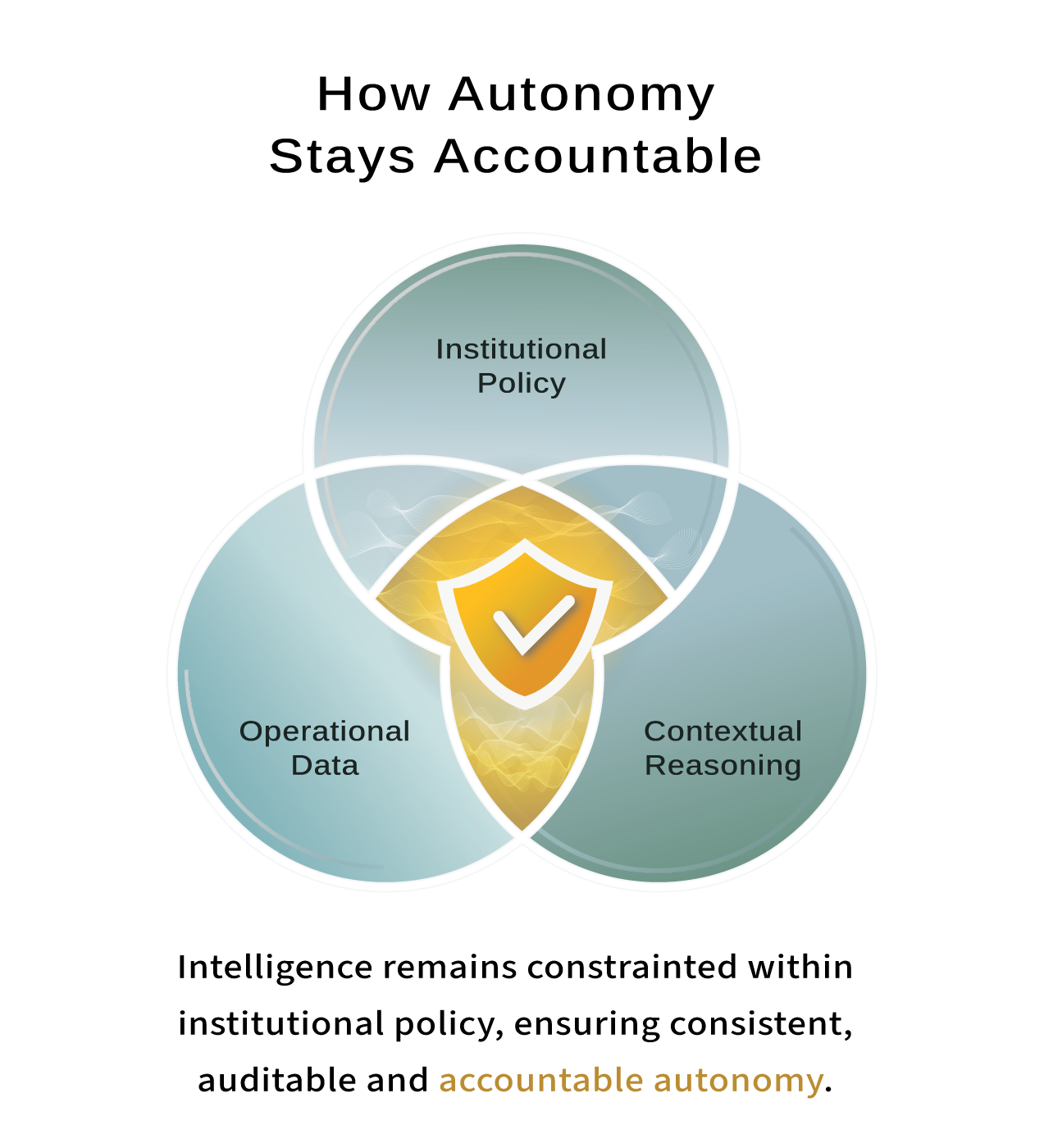
The Fabric provides the structural constraints required for Living Intelligence to operate safely. It prioritises long-term flexibility across legacy systems, custom applications, and modern SaaS ecosystems.
Within The Fabric, intelligence is:
- Contextual: Informed by real-time operational data.
- Constrained: Bound by institutional policy and governed constraints.
- Explainable: Decisions are observable and traceable.
- Accountable: Autonomous reasoning remains a subset of business intent.
The Fabric defines how governed behaviour is enforced; Living Intelligence defines how that behaviour adapts.
Federated Operations
Decentralised Delivery and Ownership
The Fabric is engineered for federated operational models. It allows multiple internal teams and external partners to build, deploy, and maintain integrations independently—without bypassing the central governance layer.
- Federated Development: Enable independent workstreams while enforcing a single architectural standard.
- Scoped Access: Partners and departments operate within strictly defined zones of authority.
- Operational Transfer: Transition ownership between partners and internal teams with no loss of structural integrity.
The Maicell Fabric is a comprehensive orchestration layer designed to decouple system design from execution. It ensures every data flow adheres to rigorous standards of real-time governance
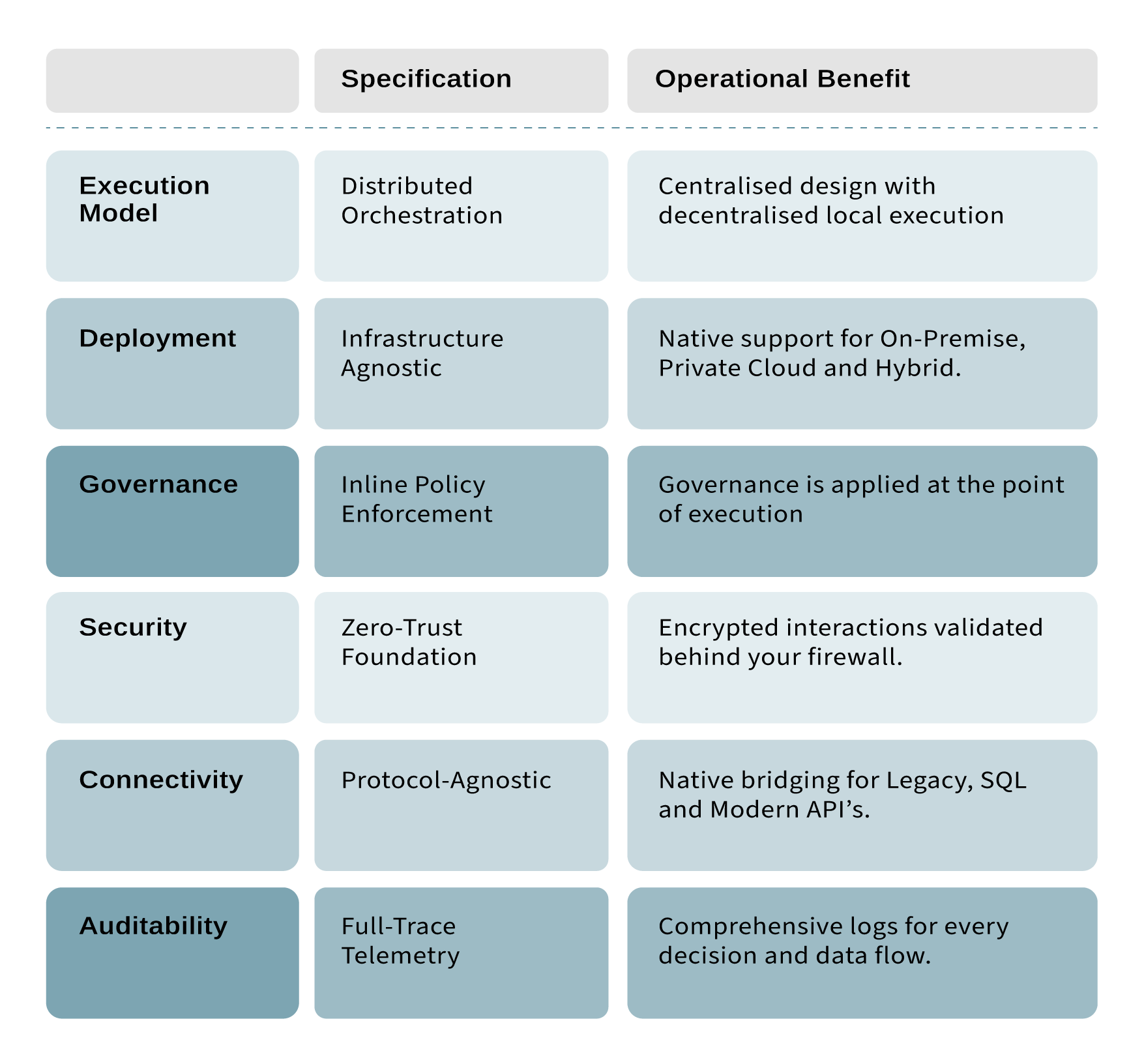
This table defines the structural parameters of The Fabric, ensuring it meets the requirements of regulated and high-stakes enterprise environments.